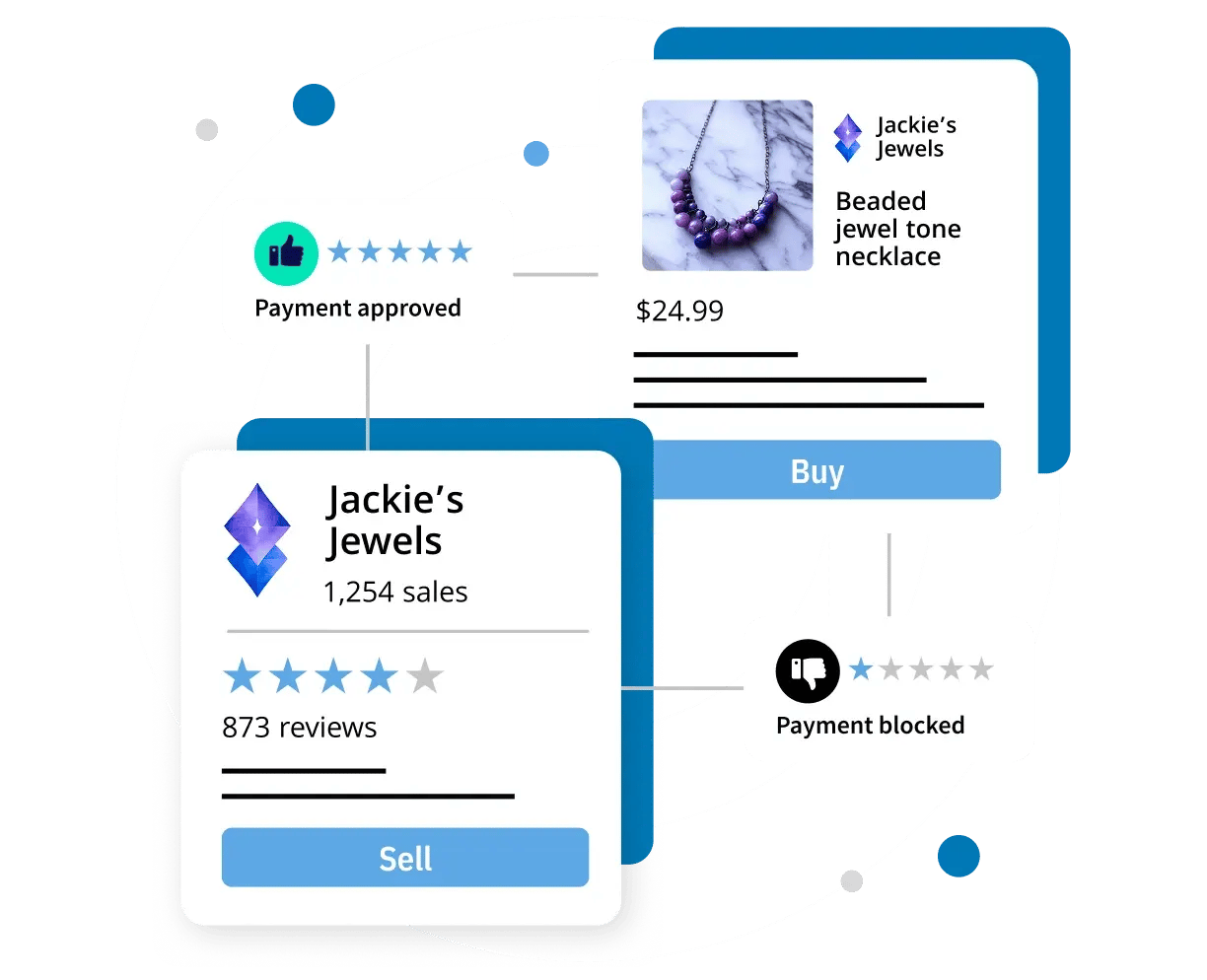
Marketplaces
Marketplace fraud doesn't stay on one side of the transaction
When fraud slips through in a marketplace, the damage rarely stays contained. Abusive buyers create seller churn. Fake sellers weaken buyer conversion. And when fraud controls get too strict, legitimate users on both sides get slowed down with more friction, more reviews, and weaker transaction flow. Pipl Trust helps marketplaces catch cross-sided abuse earlier, powered by Elephant, Pipl's large payment AI model, so fraud controls don't end up damaging the activity the platform depends on.
How abuse moves across buyers, sellers, and accounts
Marketplaces don't break only when one bad account gets through. They break when fraud controls miss how abuse moves across buyers, sellers, roles, devices, and linked accounts. Pipl Trust connects identity, behavior, and device signals across both sides of the network so abuse gets caught earlier without slowing legitimate transaction flow.
Catch abusive buyers before seller damage compounds
Repeated disputes, manipulative behavior, or coordinated abuse can quietly erode seller performance. Pipl Trust surfaces those patterns earlier, before they affect the other side of the marketplace.
Identify fake sellers before buyers are affected
A storefront may pass basic checks and still be part of a broader abuse pattern. Pipl Trust connects signals across accounts so weak storefronts don't stay active long enough to do real damage.
Surface linked behavior across roles and accounts
What looks like separate users can turn out to be linked behavior across buyer and seller roles. Pipl Trust reveals those relationships so bad actors can't keep moving through the platform undetected.Reduce seller churn and buyer loss
Abusive buyers and unresolved fraud pressure can quietly push good sellers away. By the time seller loss shows up clearly in the data, the damage has often been building for a while. On the buyer side, a fake seller or abusive transaction doesn't just affect one interaction. It changes how safe the marketplace feels, weakening conversion and repeat activity beyond the original event.

Friction slows the activity you depend on
When controls lean too heavily on stricter rules and more review, both buyers and sellers feel it. Good users get delayed, step-ups increase, and transaction flow weakens. Coordinated abuse makes this worse. Without visibility across users, roles, and linked signals, bad actors can keep moving through the marketplace long after the first warning signs appear.

Leverage marketplace-calibrated scoring
Pipl Trust API is built to fit into existing marketplace onboarding, transaction, and review workflows with minimal lift. Its flexible schema, sub-200ms latency, and stateless delivery model make it practical to embed fraud scoring directly into live marketplace decision flows, while supporting calibration to the abuse conditions you actually manage without adding operational complexity.

The foundation underneath every Pipl Trust decision
Pipl Trust draws on Pipl's identity graph and Elephant, Pipl's large payment AI model, to give marketplaces the signal depth and scoring precision to catch cross-sided abuse earlier without slowing legitimate transaction flow.
5+ Billion
Global Identities
28+ Billion
Unique Identifiers
740+ Billion
Trust Signals
Built for production inside live marketplace workflows
Fast to production
Flexible Schema
Real-time decisions
Sub-200ms response times help support live marketplace decisions without adding latency where user experience matters.
Marketplace-level calibration
Support more consistent decisions with scoring calibrated to your fraud thresholds, user roles, and marketplace abuse patterns.
From Our Identity & Trust Blog

6 Facts You Must Know About Fraud Prevention’s Shift from Rule-Based to AI
NO RULES: How AI Renders Rule-Based Fraud Prevention Obsolete

Online Dating: Do You Believe in Trust at First Sight?