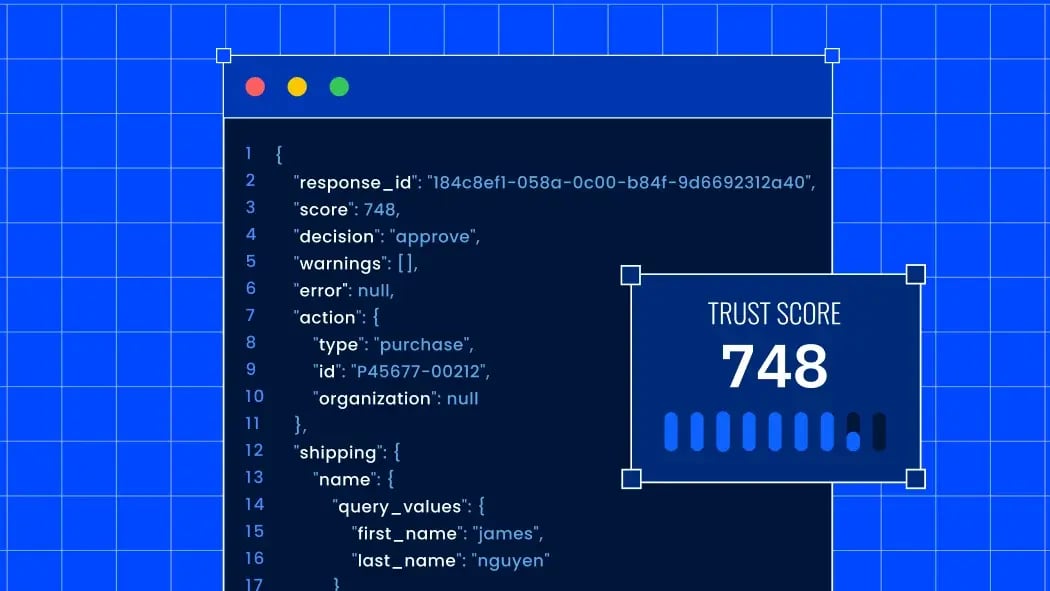
Payment fraud has evolved faster than the architectures most fraud teams built to detect it, leaving authorization performance and fraud exposure both moving in the wrong direction. Pipl Trust is built for what's hitting your business now, with scoring precise enough to hold both sides of the tradeoff.


Payment fraud has evolved across six dimensions over the past few years, and the shifts reinforce each other, which is why architectures built on prior assumptions are losing ground on both sides of the tradeoff.



When fraud risk widens, the instinct is to tighten. It worked for a previous generation of fraud, but it doesn't anymore.
Tightening doesn't slow sophisticated, automated attacks; it suppresses approvals you should have made, accelerates the revenue cost of your fraud posture, and widens the gap you're trying to close.
Roughly 10% of card-not-present transactions are falsely declined, and false-decline losses are widely estimated to dwarf direct fraud losses. The response that feels safest is the one making the problem worse.

A declined transaction isn't logged as a damaged relationship or wallet share lost to a competitor. It's logged as a successful prevention. The metric that should be flagging suppression is the one hiding it.

Every approval you should have made costs the transaction, the customer relationship it strains, and the lifetime value at risk when that strain accumulates. Your reporting captures one of those at best.

Every peak, launch, and growth period widens the gap between what your authorization performance shows and what it's costing. Conservative scoring carries a cost in steady state. The cost rises with volume.

A customer declined at the moment of payment doesn't shrug it off. They reach for a different option, and the institution that authorizes the transaction earns the next ones, too. Every suppressed approval is a wallet share shift you can't measure.