Case-studies-fashion-retailer-Hero
Case Study

Half of orders approved, two-thirds of fraud caught

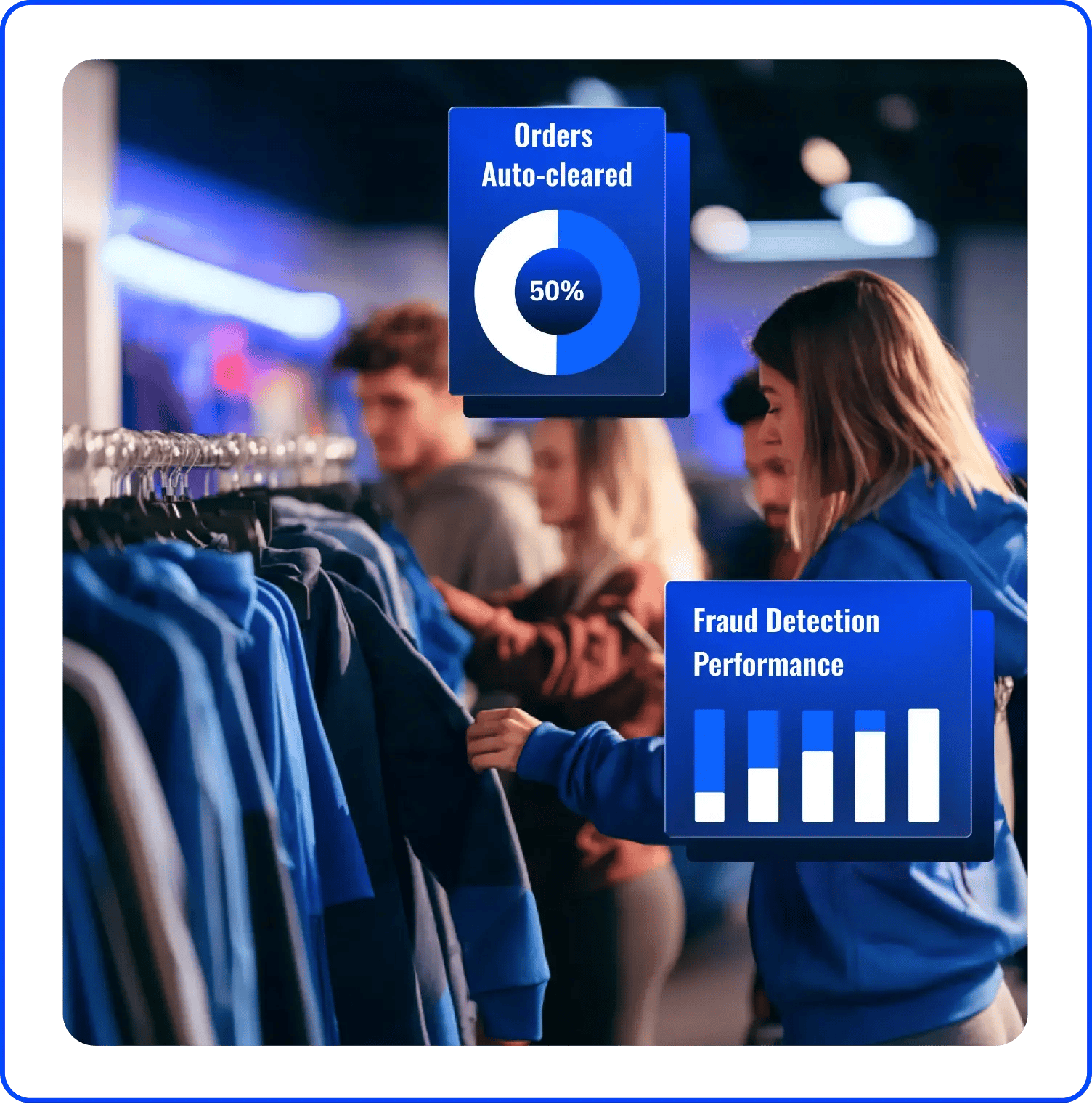
Return fraud and wardrobing cost fashion retailers billions every year. For this global apparel company, the question wasn’t whether to fight fraud. It was how to do it without turning away the shoppers who keep the business running. A calibrated Pipl Trust Score gave them a way forward: 50% of orders cleared automatically at a 0.11% fraud rate, and a single reject rule caught 66% of fraud.


The challenge

Global order volume kept climbing, and the review team felt it first. More orders brought more fraud attempts, and more of those attempts landed in a manual queue that kept getting longer. The existing rules were doing double duty, blocking bad orders while trying not to block good ones. Tightening them would have stopped more fraud, but it would also have sent paying customers to a decline page.

So instead of adding another layer of rules, the retailer brought in Pipl Trust. Pipl built a Trust Score around the retailer’s own order history. That gave analysts a way to see which orders deserved confidence, not just which ones looked suspicious.

Their goals were clear

Each goal was achievable on its own. The real test was getting all three from the same change:

stop-blk

Stop more fraud before orders ship

approve-blk

Say yes to more low-risk orders

manual-review-blk

Shrink the manual review queue

Why more rules weren’t the answer

Tuning the existing rule set had real limits, and 3 of them shaped what the retailer needed next.
scale-blk

Review queues scaled with orders

Each increase in order volume added more borderline cases for analysts to work through by hand.

fashion-fraud-light-bg

Fashion fraud carries a high price

With return fraud and wardrobing draining billions from apparel retail, every fraudulent order that slipped through carried a real cost.

deny-blk

Rules only knew how to say no

A rule can flag a bad order, but it can’t vouch for a good one. Any change that blocked more fraud also had to approve more real shoppers.

How the system changed with Pipl


Pipl built a custom score on the retailer’s transaction history, then checked it against orders with known outcomes. Two distinct signal profiles emerged. On the risk side, orders with invalid billing phones, VPN IP addresses, or freight-forwarded shipping addresses stood out. On the trust side, an email that lined up with the billing name or address was one of the clearest markers of a genuine shopper. Mapping those profiles to score thresholds gave the team a high-confidence approval zone above 700 and a high-risk zone below 200.

Pipl's proof of signal intelligence

10.4x

more trustworthy when the email matched the billing name or address

3.8x

more fraud on orders with invalid billing phones, VPN IPs, or freight-forwarded addresses

0.86K

ROC-AUC after calibration, up from 0.78 uncalibrated

The real win? Clear decisions instead of manual review.

Fraud controls often improve one side of the decision at the expense of the other. This retailer improved both. Half of its orders qualified for automatic approval with almost no fraud among them, and a single rule concentrated two-thirds of the fraud in one place. That left analysts with a much narrower set of orders that actually needed a second look.

50% of orders auto-approved at a 0.11% fraud rate

Half of all orders qualified for automatic approval, with fraud nearly absent from the group.

15x lower fraud rate than average

The approved segment ran at a fraction of the retailer’s overall fraud rate.

66% of fraud caught by a single reject rule

One reject rule isolated two-thirds of all fraud in a single segment the team could act on.