Pipl Trust API

Know who's behind every transaction

Pipl Trust API is a fraud detection API that connects transaction details to real identities. Approve more good customers and detect fraud sooner.

POST Pipl Trust API
TRUST SCORE
0
Approve
Attribute scores
Email0
Phone0
Address0
IP0
Trust signals16 trust · 0 risk
Email is aged
Email is seen in multiple sources
Longstanding and single-owner phone
Residential IP with low volatility

The revenue hiding in your declines

Many declines aren’t fraud. They’re good sales lost to incomplete identity data.
manual-review-blk

Cut manual review

Automate low-risk decisions so analysts focus on real threats.

approve-blk

Recover lost revenue

Approve genuine first-time and international customers, even without purchase history.

decline-blk

Reduce cart abandonment

Remove unnecessary verification steps that stall checkout.

How Trust API Works

One call. One score. The reasoning behind it.

Step 1

Send what you already collect

No new forms or data collection required.

Name
Phone
Email
Address
IP Address
Device
Step 2

We connect the dots

1,000+ signals across 5B+ identities reveal connections and inconsistencies.

Identity Graph 5B trusted identities
elephant-icon-symbol Machine Learning Model Adaptive AI + 1,000 signals
Step 3

Act on an explainable fraud score

Get a Trust Score, reason codes, and signals that show why.

Trust ScoreRISKY
112
Disposable email VoIP phone number IP: VPN / proxy
Trust scores & signals
Trust ScoreTRUSTED
748
Email age: 9 yrs Phone/name match IP: residential

Low Latency 200ms High Availability 99.99%
Inside every response

Every score explained
trust-score

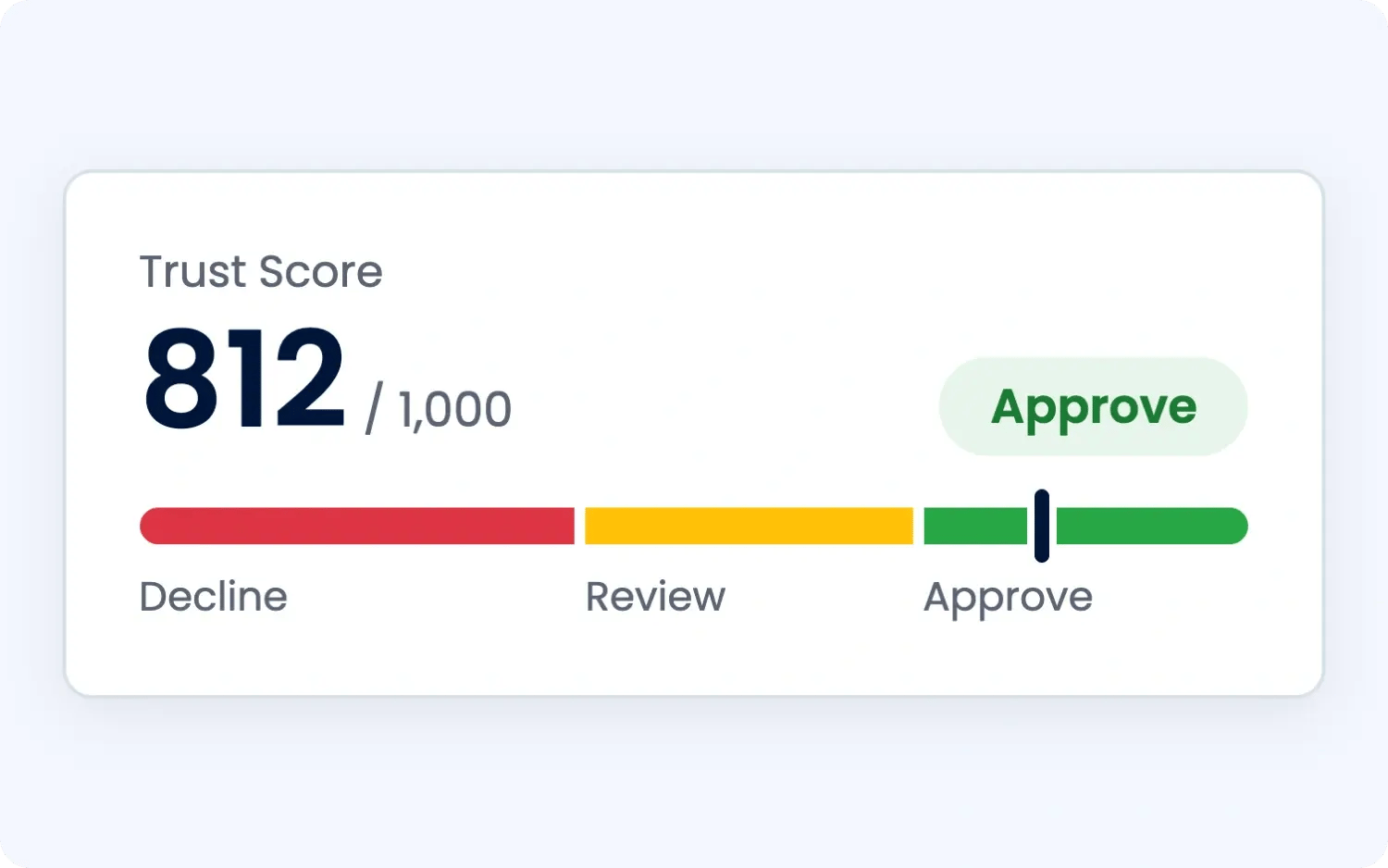
Trust Score

One real-time risk score from 0 to 1,000, mapped to approve, review, or decline at the thresholds you set.
reason-codes

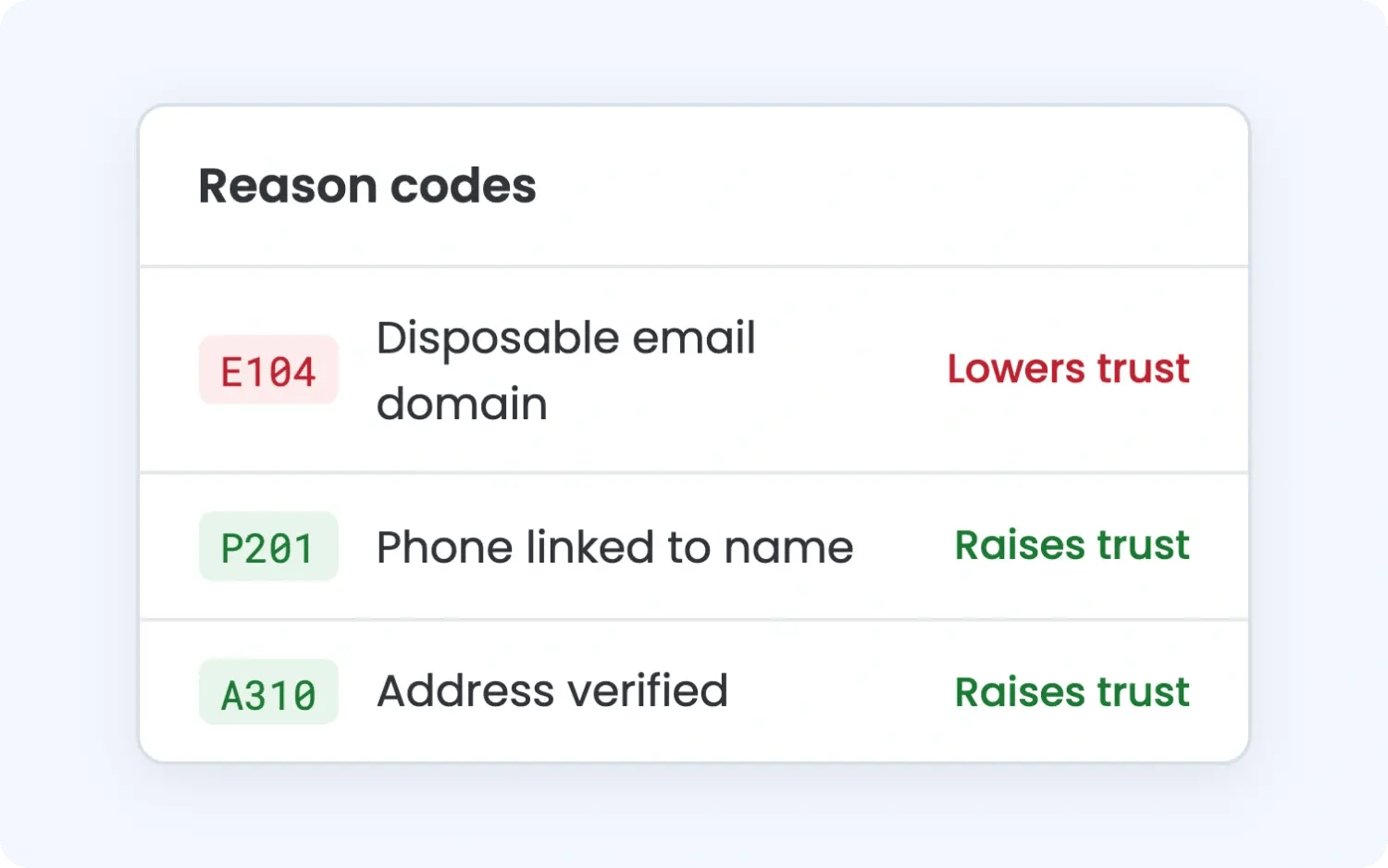
Reason Codes

Plain-language codes for what raised or lowered trust, like a disposable email, so analysts review faster.
attribute-scores

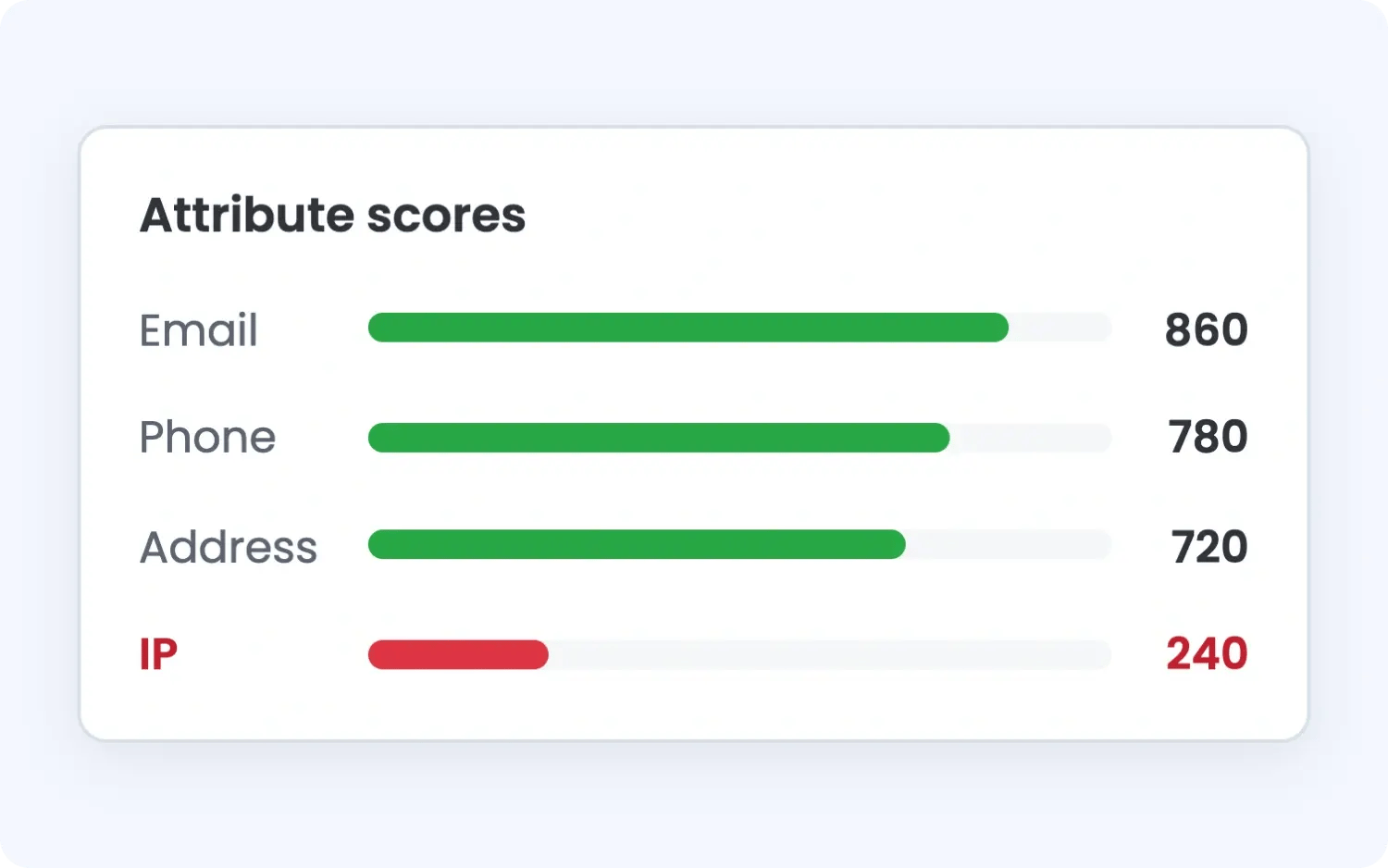
Attribute Scores

Separate scores for email, phone, address, and IP show which detail carries the risk.
trust-signals

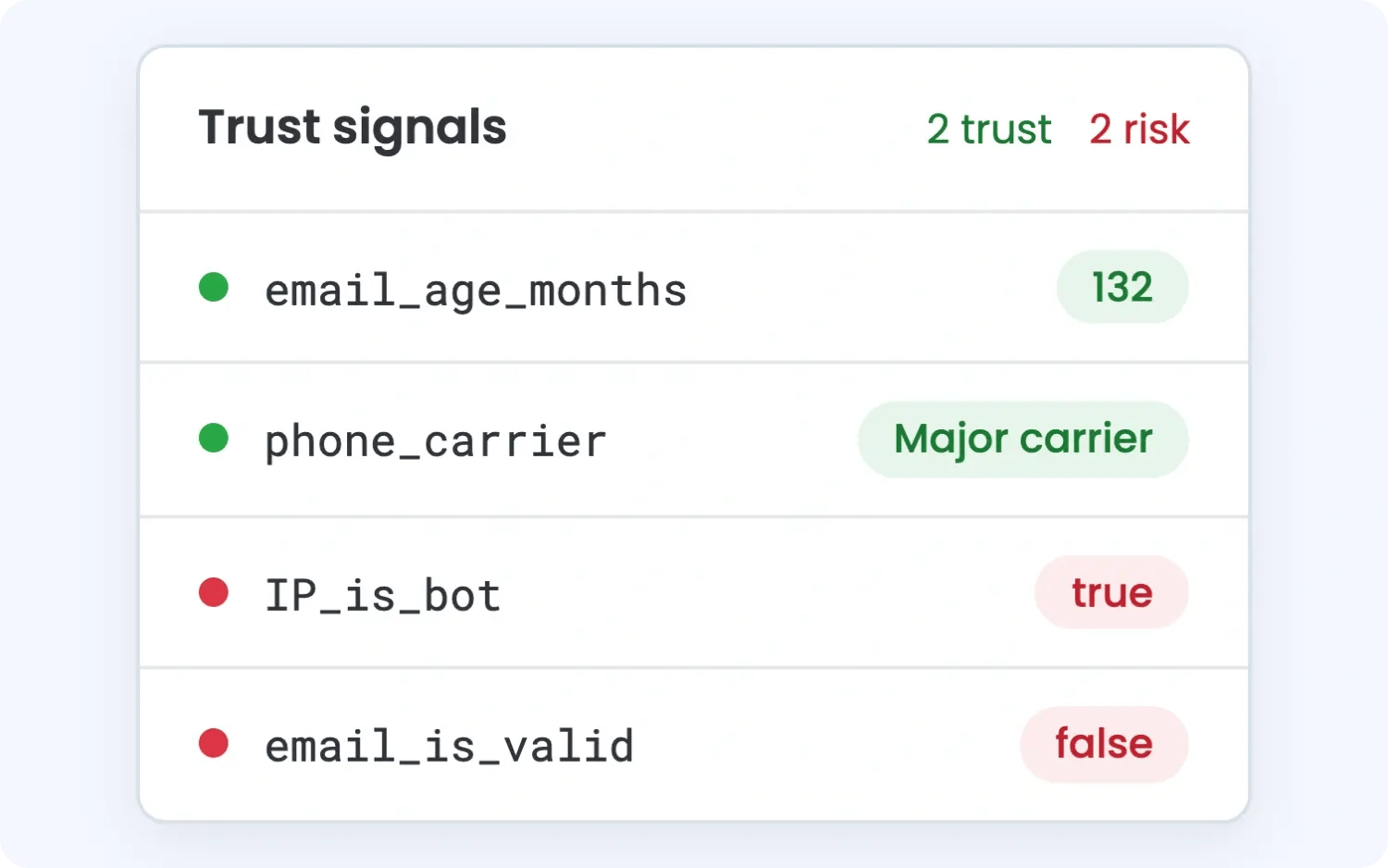
Trust Signals

The evidence behind the score, like email age, breach exposure, disposable domains, and velocity.
connectivity

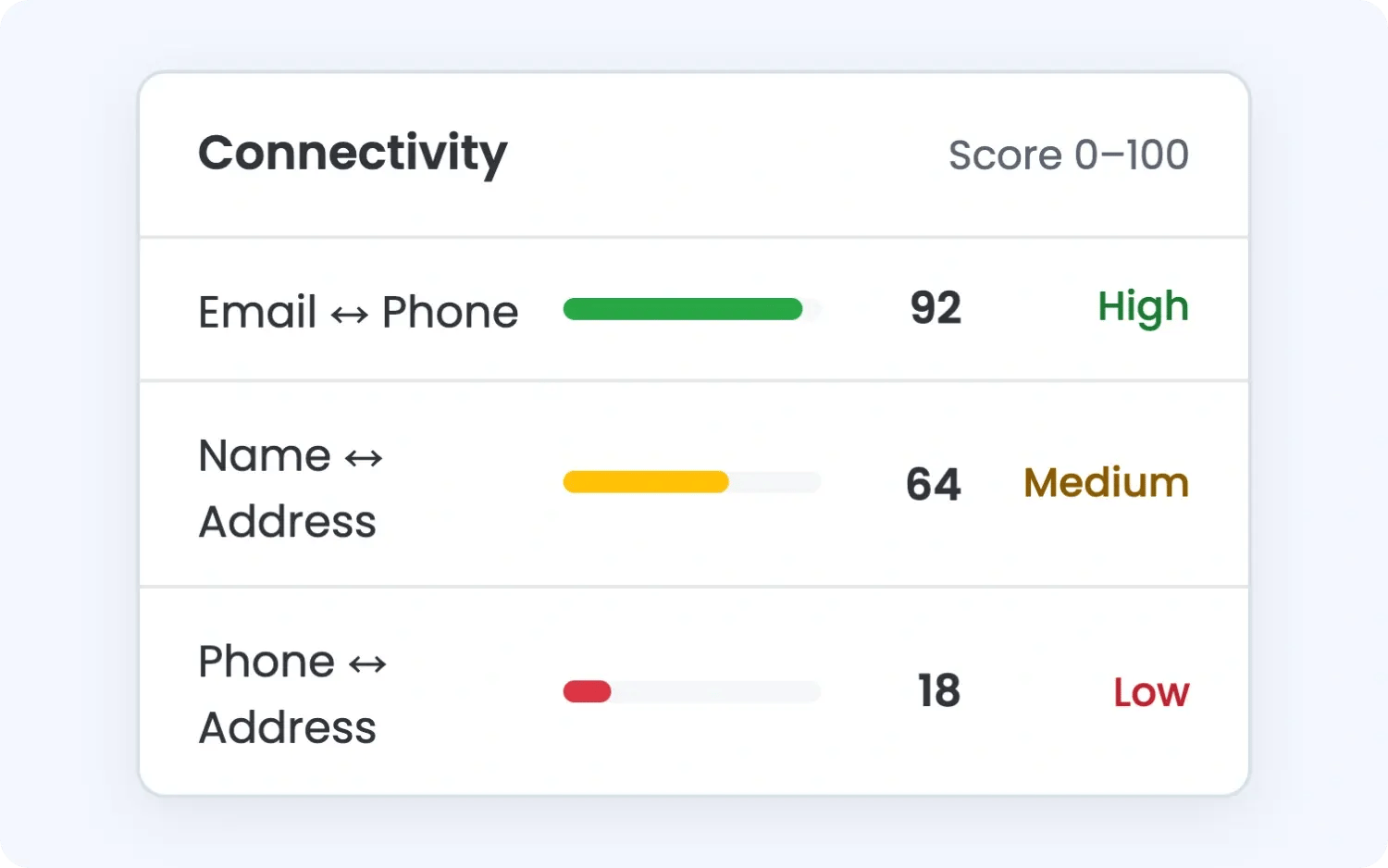
Connectivity

How strongly each pair of details links to the same person, so a real customer isn't flagged for a mismatch.

Protect revenue at every touchpoint

person-white

Account onboarding

Grow real signups and keep synthetic identities out of your books.

device-white

Login

Spot account takeover without adding friction for loyal customers.

cards-white

Card-not-present purchases

Approve more first-time and cross-border orders while managing chargeback risk.
 

5B

5 billion unique identities

1T

1 trillion diverse signals

2B

2 billion daily signal updates

elephant-our-model

Identity intelligence, live in one API call

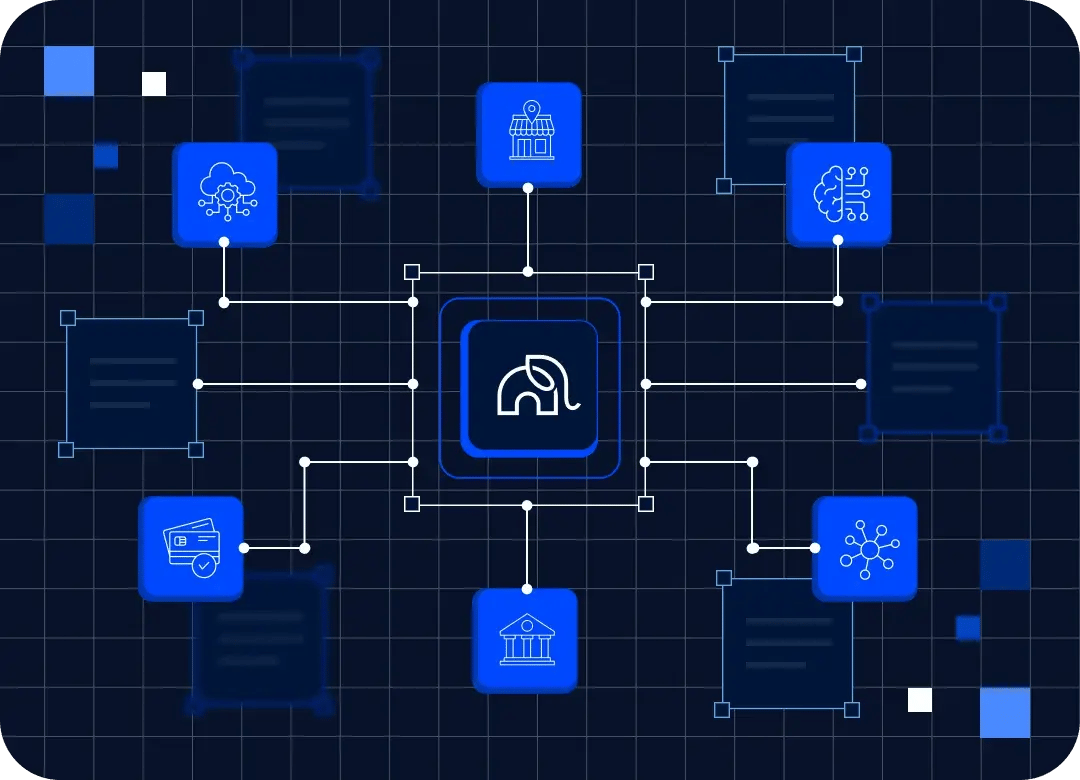
Elephant, our large risk model, checks whether the details in front of you belong to one real person, then shows its reasoning. We don't replace your risk engine; we give it the context to say yes more often.


  • Integrate with your existing fraud stack
  • Sharpen scores with your own transaction outcomes
  • Adjust thresholds as your business changes

What changed for one Financial Services provider

The provider needed to automate easy approvals without declining good customers.
Trust API scored every signup, calibrated to its own fraud data.

94%

of good customers cleared at the accept threshold

76%

smaller manual review queue

69%

of all fraud caught in the lowest 25% of scores

Frequently Asked
Questions

What is a fraud detection API?

A fraud detection API scores the risk of a signup, login, or purchase in real time. Pipl Trust API returns a Trust Score from 0 to 1,000, reason codes, and signals that show whether the details belong to one real person, so your rules can approve, review, or decline.


Does it replace my risk engine?

No. It plugs into your stack as a scoring layer. You set thresholds in the Trust Console without changing code.


How does calibration work?

Calibration tunes the Trust Score with your own fraud and legitimate transactions, so good customers score on your data, not a generic baseline.


How does it catch synthetic identities?

Synthetic identities mix details from different people. Trust API checks whether those details share a real history, so fake accounts are flagged at signup.


What is a fraud detection API?

What is a fraud detection API?

A fraud detection API scores the risk of a signup, login, or purchase in real time. Pipl Trust API returns a Trust Score from 0 to 1,000, reason codes, and signals that show whether the details belong to one real person, so your rules can approve, review, or decline.


Does it replace my risk engine?

Does it replace my risk engine?

No. It plugs into your stack as a scoring layer. You set thresholds in the Trust Console without changing code.


How does calibration work?

How does calibration work?

Calibration tunes the Trust Score with your own fraud and legitimate transactions, so good customers score on your data, not a generic baseline.


How does it catch synthetic identities?

How does it catch synthetic identities?

Synthetic identities mix details from different people. Trust API checks whether those details share a real history, so fake accounts are flagged at signup.


Frequently asked questions

How do you investigate a suspicious transaction?

Check whether the email, phone, address, IP, and device connect to one real person. Trust Insights shows it in one view.

Does Trust Insights replace my analysts?

No. It equips reviewers with evidence. The decision stays with your team.

Do analysts need SQL?

No. Everything is visual.


Will Trust Insights work inside my case management tool?

Yes, Simply embed it in your review screen and launch from the Chrome extension without additional code.

Can you control access for better security?

Yes, Admins assign seats and permissions. Analysts see only what their role allows. You can access a downloadable audit log that tracks user changes.

How do you investigate a suspicious transaction?

How do you investigate a suspicious transaction?

Check whether the email, phone, address, IP, and device connect to one real person. Trust Insights shows it in one view.

Does Trust Insights replace my analysts?

Does Trust Insights replace my analysts?

No. It equips reviewers with evidence. The decision stays with your team.

Do analysts need SQL?

Do analysts need SQL?

No. Everything is visual.


Will Trust Insights work inside my case management tool?

Will Trust Insights work inside my case management tool?

Yes, Simply embed it in your review screen and launch from the Chrome extension without additional code.

Can you control access for better security?

Can you control access for better security?

Yes, Admins assign seats and permissions. Analysts see only what their role allows. You can access a downloadable audit log that tracks user changes.

Sell More. Lose Less.

Run a proof of concept and calculate how much revenue you’ve been turning away.