Pipl Trust Device connects every device to the identity behind it, so you can recognize returning customers and catch suspicious signups, logins, and purchases.
Returning buyers clear checkout on a new card or address, instead of landing in your declines.
Brand-new devices, multi-accounting, and logins from devices the account owner has never used get flagged in real time.
Known people on known devices skip extra verification, so loyal customers aren't slowed down.
Three steps from page load to a scored device.
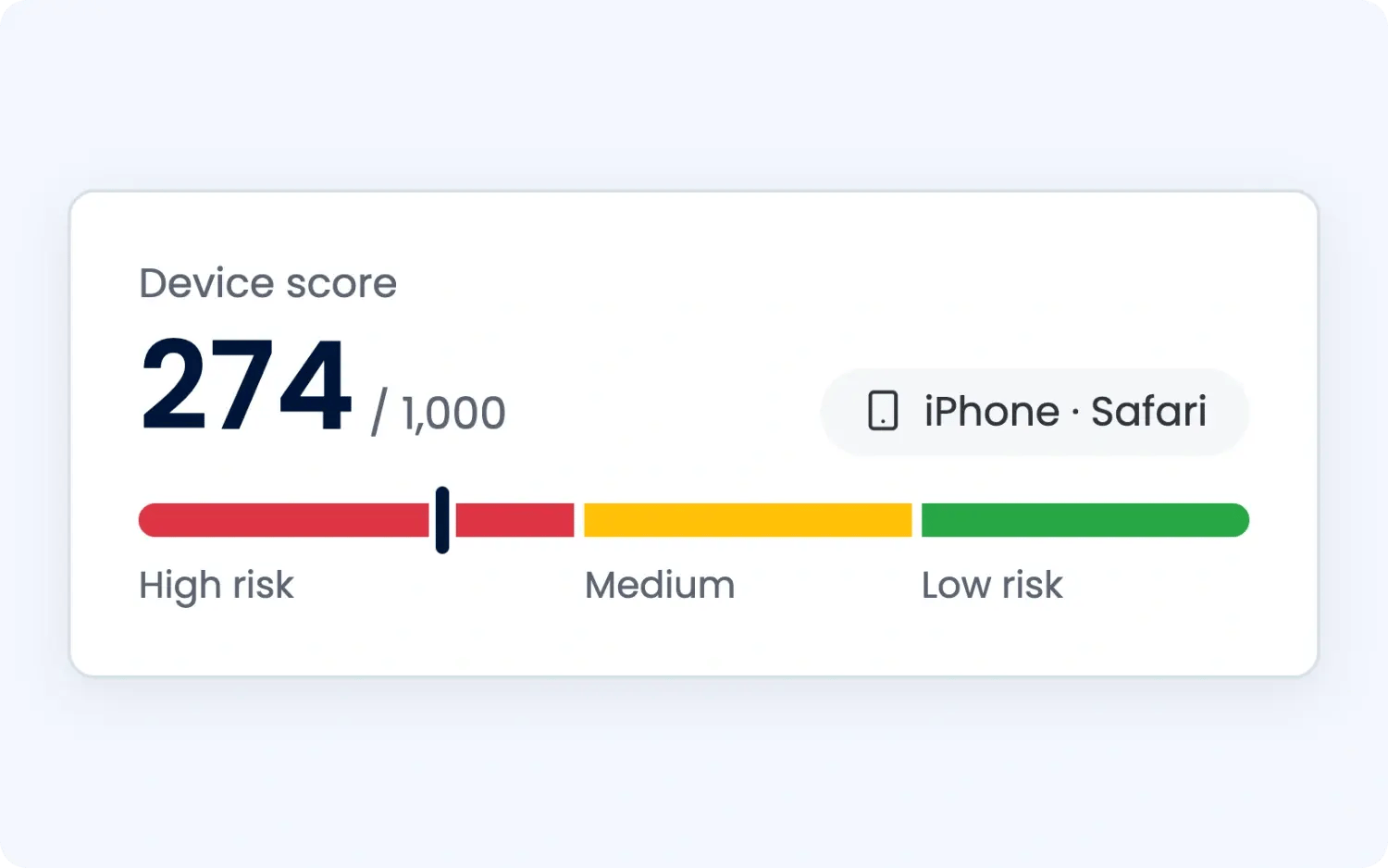
A 0 to 1,000 score for the device alone, separate from the Trust Score.
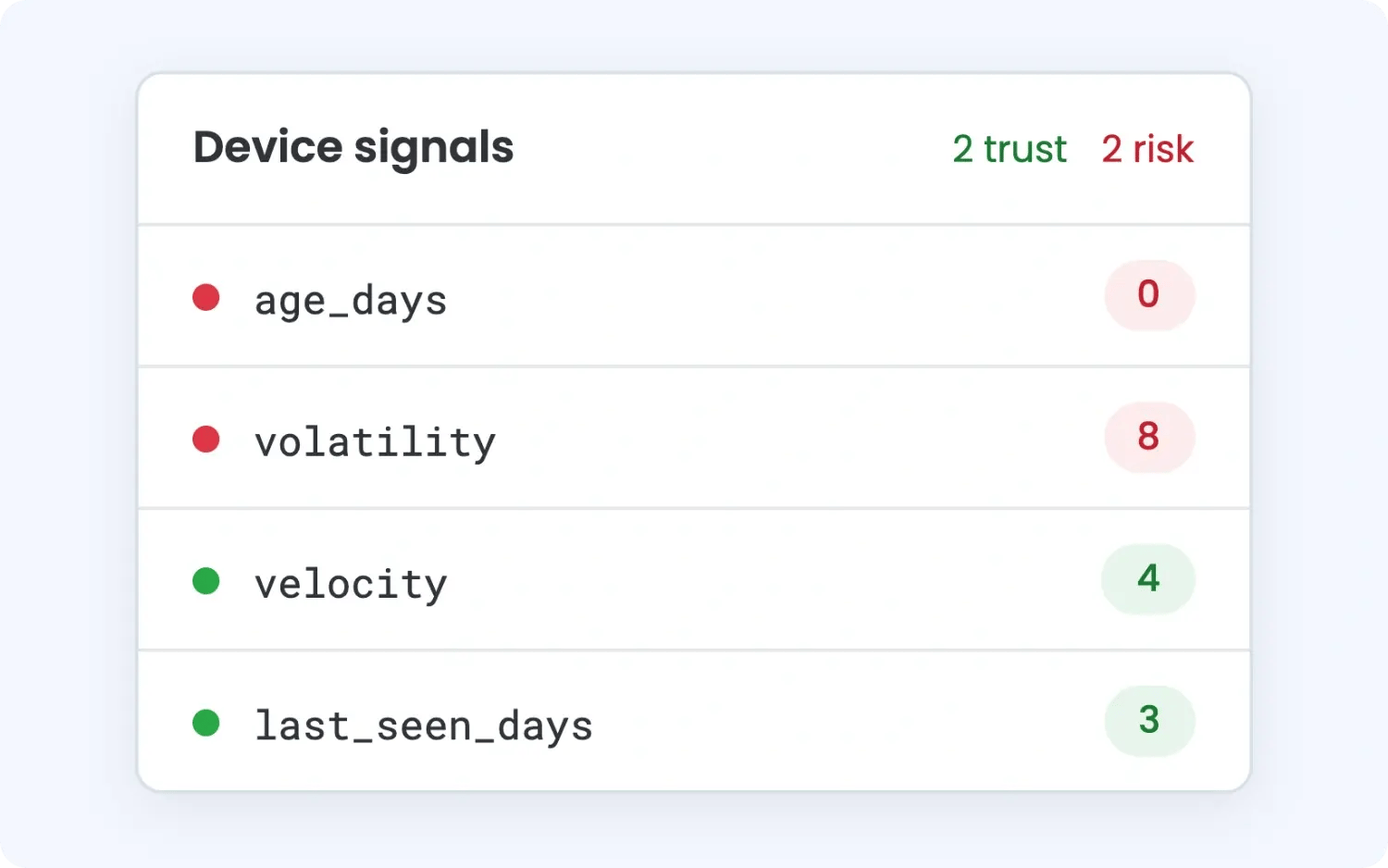
History, activity, and integrity checks that show how the device has been used.
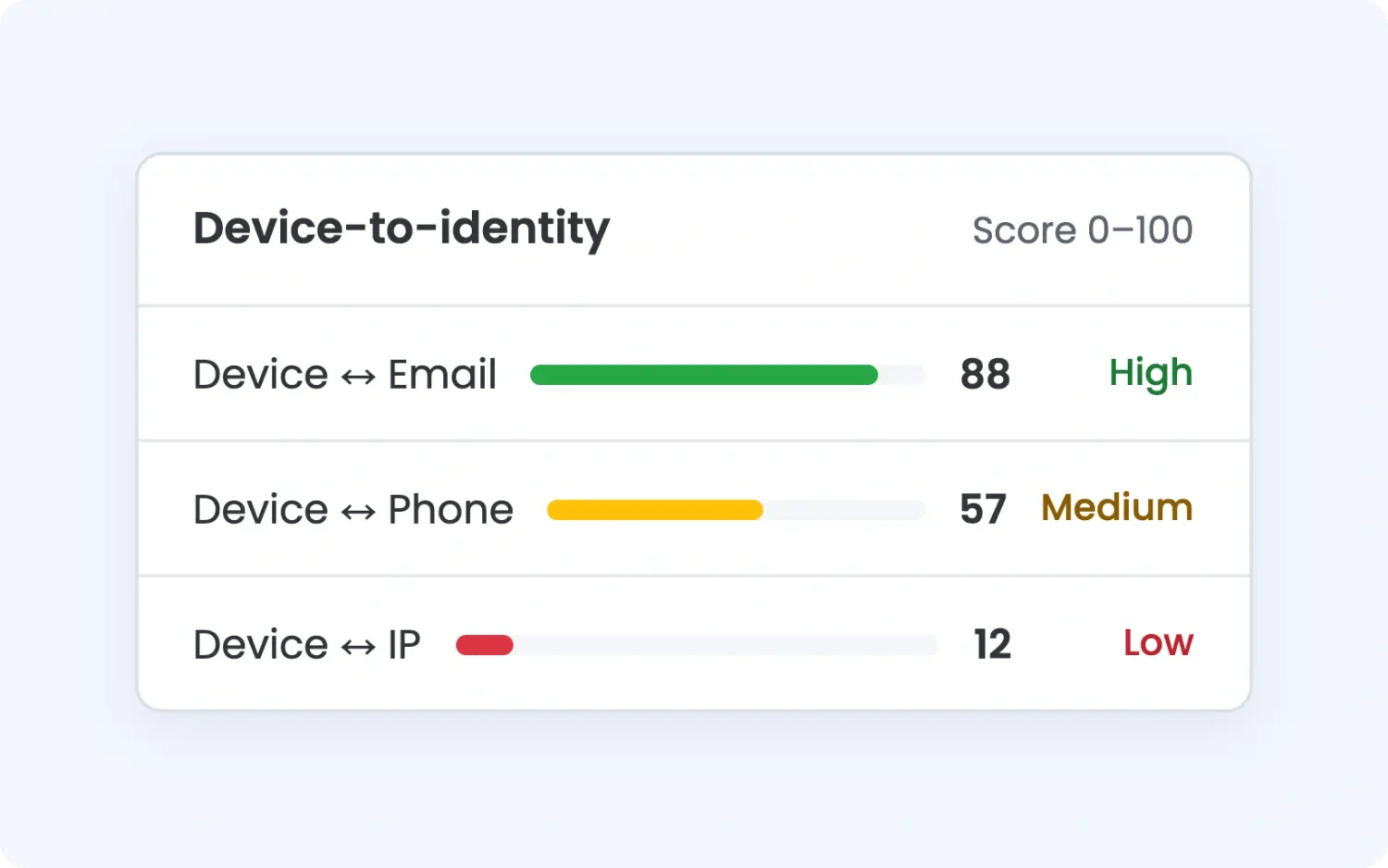
Match scores linking the device to the email, phone, and IP in the request.
5 billion unique identities
1 trillion diverse signals
2 billion daily signal updates
One token format across every SDK keeps your Trust API integration the same. Our large risk model weighs the device against identity signals and returns reason codes that explain the Trust Score.
Included with Trust API at no added cost.
Fingerprinting tells you a device has been here before. Trust Device tells you whether it belongs to the person using it, by checking it against identity history in the same Trust API call. A loyal customer on a new phone gets approved; a familiar device in the wrong hands gets stopped.
Device intelligence reads a device's history, integrity and activity to judge risk. Trust Device goes further and measures how strongly the device is linked to the email, phone and IP in the request, returning a device score from 0 to 1,000.
Yes. Trust Device adds device intelligence to the Trust API calls you already make, at no additional cost. Without a device token, Trust API keeps scoring identity alone, so nothing breaks if the token is missing.
Device and browser attributes such as hardware, graphics, screen, fonts and platform settings, used to recognize each device and detect bots and automation. It never collects form data, passwords, location, contacts or browsing history.
No. The SDK runs in the background and never blocks a page or screen. The web SDK is about 24 KB and loads asynchronously; the mobile SDKs collect on background threads.
Yes. iOS and Android SDKs produce the same device token as the web SDK, with no tracking prompt on iOS and no runtime permission prompts on Android. Your Trust API integration stays the same on every platform.
How is it different from device fingerprinting?
Fingerprinting tells you a device has been here before. Trust Device tells you whether it belongs to the person using it, by checking it against identity history in the same Trust API call. A loyal customer on a new phone gets approved; a familiar device in the wrong hands gets stopped.
What is device intelligence?
Device intelligence reads a device's history, integrity and activity to judge risk. Trust Device goes further and measures how strongly the device is linked to the email, phone and IP in the request, returning a device score from 0 to 1,000.
Do I need Trust API?
Yes. Trust Device adds device intelligence to the Trust API calls you already make, at no additional cost. Without a device token, Trust API keeps scoring identity alone, so nothing breaks if the token is missing.
What does the SDK collect?
Device and browser attributes such as hardware, graphics, screen, fonts and platform settings, used to recognize each device and detect bots and automation. It never collects form data, passwords, location, contacts or browsing history.
Will it slow down my site or app?
No. The SDK runs in the background and never blocks a page or screen. The web SDK is about 24 KB and loads asynchronously; the mobile SDKs collect on background threads.
Does it work in native mobile apps?
Yes. iOS and Android SDKs produce the same device token as the web SDK, with no tracking prompt on iOS and no runtime permission prompts on Android. Your Trust API integration stays the same on every platform.
Certified for global privacy and security standards

Check whether the email, phone, address, IP, and device connect to one real person. Trust Insights shows it in one view.
No. It equips reviewers with evidence. The decision stays with your team.
No. Everything is visual.
Yes, Simply embed it in your review screen and launch from the Chrome extension without additional code.
Yes, Admins assign seats and permissions. Analysts see only what their role allows. You can access a downloadable audit log that tracks user changes.
How do you investigate a suspicious transaction?
Check whether the email, phone, address, IP, and device connect to one real person. Trust Insights shows it in one view.
Does Trust Insights replace my analysts?
No. It equips reviewers with evidence. The decision stays with your team.
Do analysts need SQL?
No. Everything is visual.
Will Trust Insights work inside my case management tool?
Yes, Simply embed it in your review screen and launch from the Chrome extension without additional code.
Can you control access for better security?
Yes, Admins assign seats and permissions. Analysts see only what their role allows. You can access a downloadable audit log that tracks user changes.
See what Trust Device finds in your own traffic.